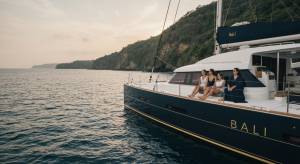
Phinisi vs Superyacht: Which Indonesia Luxury Charter is Better?
- Phinisi: Best for cultural immersion, slow travel, and accessing remote coves.
- Superyacht: Best for speed, modern comforts, and multi-region itineraries.
- The Deciding Factor: Your preference for historical romance versus modern performance.
The air hangs thick with the scent of clove and damp earth. Sunlight, fractured by the turquoise water below, dances across the teak deck. To the port side, a volcanic island draped in primeval forest rises sharply from the sea; to starboard, a pod of dolphins breaks the glassy surface. This is the moment of decision, the inflection point for any discerning traveler planning an expedition through the Indonesian archipelago. The question isn’t whether to go, but how. Before you lies a choice between two magnificent yet fundamentally different vessels, each promising a distinct passage through these 17,508 islands. Do you choose the soulful silhouette of a traditional phinisi or the sleek, powerful lines of a modern superyacht? This decision will define your entire journey.
The Soul of the Archipelago: Understanding the Phinisi Legacy
To charter a phinisi is to charter a piece of living history. These majestic wooden vessels are not mere replicas; they are the direct descendants of the ships that have plied the Spice Routes for centuries. The art of building them, a tradition of the Konjo people of South Sulawesi, was inscribed on UNESCO’s list of Intangible Cultural Heritage of Humanity in 2017. Construction is a ritualistic process, performed without blueprints, relying on knowledge passed down through generations. Master builders use tropical hardwoods like ironwood (kayu uli) for the keel and teak for the decking, creating ships that are as durable as they are beautiful. When you step aboard a vessel like the 65-meter Lamima or the 55-meter Prana by Atzaró, you are stepping into a narrative. The gentle creak of the timbers, the vast expanse of hand-stitched sails against the sky—it’s a sensory experience that connects you directly to the maritime soul of Indonesia.
But do not mistake tradition for a lack of comfort. Today’s luxury phinisis are sophisticated platforms for exploration. They are typically motor-sailors, meaning their twin engines provide reliable power and a cruising speed of 8-10 knots, while the sails offer stability and silent, emission-free passage when the winds are favorable. The interiors are often astounding, featuring expansive master suites, en-suite bathrooms with rainfall showers, and elegant saloons air-conditioned to a perfect 22 degrees Celsius. The crew, often hailing from the same seafaring communities that build the boats, possess an intuitive understanding of the local waters. As one veteran captain, Iwan Susanto, told me over satellite phone from the Banda Sea, “On a phinisi, you don’t just see Indonesia, you feel it. The rhythm of the boat is the rhythm of the islands.” An indonesia luxury yacht s charter on a phinisi is an exercise in authentic, unhurried discovery.
The Apex of Modern Maritime Engineering: The Superyacht Experience
Where the phinisi offers a journey into the past, the superyacht presents a vision of the future. These vessels are marvels of naval architecture, designed for performance, stability, and uncompromising luxury. A modern superyacht, often constructed with an aluminum hull and composite superstructure, represents the pinnacle of comfort and capability. Think of names like Feadship, Amels, or Lürssen—yachts that can cruise comfortably at 15 knots and reach top speeds exceeding 20 knots. This velocity fundamentally changes the nature of an Indonesian charter. A journey from Bali to the Komodo National Park, which might take a phinisi over 24 hours of steady motoring, can be accomplished in an afternoon. This allows for itineraries that are simply not feasible on a slower vessel, such as combining the whale sharks of Cenderawasih Bay with the dramatic landscapes of Raja Ampat in a single 10-day trip—a distance of over 350 nautical miles.
The onboard experience is akin to a floating six-star boutique hotel. Zero-speed stabilizers ensure the yacht remains perfectly still at anchor, eliminating any roll from the sea swell. The guest-to-crew ratio often exceeds 1:1, providing a level of intuitive, personalized service that is second to none. Amenities are extensive: climate-controlled gyms with ocean views, private cinemas with state-of-the-art sound systems, dedicated spa facilities with onboard masseuses, and a vast collection of water toys, from jet skis and Seabobs to eFoils and even personal submersibles on select vessels. For the traveler who values efficiency, privacy, and access to the latest technology, the superyacht is the definitive platform for an indonesia luxury charter. It’s less about embracing the local rhythm and more about imposing your own, creating a seamless bubble of luxury from which to explore one of the world’s last great wildernesses.
Itinerary and Access: Where Can Each Vessel Take You?
The physical characteristics of each vessel directly dictate the geography of your adventure. The Indonesian archipelago is a complex mix of deep oceanic trenches and shallow, reef-strewn seas. A vessel’s draft—the vertical distance between the waterline and the bottom of the hull—is a critical factor. Luxury phinisis, with their traditional design, often have a shallower draft, typically ranging from 3 to 4.5 meters. This is a significant advantage, allowing them to navigate and anchor in secluded bays and coves that are inaccessible to larger yachts. Imagine tucking into a hidden lagoon in the Wayag Islands of Raja Ampat, completely alone, with limestone karsts soaring around you. This is the phinisi’s domain. They can get closer to the shore, making access to remote beaches and snorkeling spots more direct.
Conversely, a modern superyacht of 50 meters or more will have a draft of 5 meters or greater, and a wider beam. This size restricts them to deeper channels and anchorages, sometimes requiring a longer tender ride to reach the shore. However, their superior range and speed open up a different kind of access. A superyacht can comfortably cruise the 1,500 nautical miles from Flores to West Papua, crossing the open expanses of the Banda and Seram Seas with speed and stability. This makes a “greatest hits” tour of Indonesia possible, linking disparate iconic locations like Komodo, the Spice Islands, and Raja Ampat. According to the official Indonesian Ministry of Tourism, the country’s waters span over 3.25 million square kilometers. Covering that immense territory requires the power and endurance that a superyacht provides, making it the superior choice for a grand, multi-region expedition.
Onboard Ambiance and Service: Tradition Meets Technology
The atmosphere aboard a phinisi is one of relaxed elegance and deep connection to the environment. Life is lived on the expansive, open-air decks. Meals are often served al fresco on a grand dining table on the aft deck, with the panorama of the islands as your backdrop. The design encourages a communal, familial feeling among guests and crew. The service style is warm, genuine, and deeply knowledgeable. Your divemaster might be a man who has explored these specific reefs since he was a boy, and the chef might use recipes for sambal passed down from his grandmother. It’s a style of luxury rooted in authenticity and place. While all modern comforts are present, the experience is intentionally designed to strip away the unnecessary and focus on the surrounding nature. The primary soundtrack is the wind in the sails and the water against the hull, not a Sonos system—though one is certainly available.
On a superyacht, the ambiance is one of meticulous perfection and controlled environments. The interior is a sanctuary of cool, quiet, and absolute comfort. Every detail is managed by a highly professional, formally trained crew, led by a captain and purser who orchestrate the experience with precision. The service is discreet and anticipatory; your preferred cocktail appears before you’ve asked for it. The luxury is technological: advanced audiovisual systems, high-speed satellite internet (capable of streaming in even remote locations), and sophisticated climate control. The galley is often run by a Michelin-pedigreed chef capable of producing top-tier cuisine, from a 12-course tasting menu to a simple, perfect club sandwich at 3 AM. This is a platform for those who want to explore the wild without compromising on the highest standards of modern living. It’s a controlled, curated, and utterly flawless experience.
The Cost Equation: Deconstructing the Charter Fee
Discussing the cost of an Indonesia luxury charter requires an understanding of the different pricing models. Both phinisis and superyachts are typically chartered by the week, but the inclusions can vary. A high-end luxury phinisi, such as the 51-meter Dunia Baru, might charter for approximately $95,000 to $125,000 per week. The most exclusive phinisis in the world, like the aforementioned Lamima, can command rates upwards of $150,000 per week. These rates are often “all-inclusive,” covering full board, soft drinks, a certain amount of alcohol, and activities like diving, kayaking, and shore excursions. This transparent pricing structure is appealing to many charterers.
Superyacht charters operate on a different model: a base charter fee plus APA (Advanced Provisioning Allowance). The base fee for a 50-meter superyacht in the region typically starts around $200,000 per week and can easily exceed $500,000 for larger, more prestigious vessels. The APA is a supplementary charge, usually calculated as 30-35% of the base fee, paid in advance. This fund is used by the captain to cover all variable expenses during the charter, such as fuel, food, beverages, port fees, and any special requests. At the end of the charter, a detailed account is presented, and any unspent funds are returned to the client. While this model is less straightforward, it offers maximum customization. If you desire vintage champagne, daily deliveries of Japanese wagyu beef, and long, high-speed passages, the APA covers it. Ultimately, while a phinisi may present a better “value” in terms of inclusions, the choice is less about budget and more about the preferred style of expenditure and experience.
Quick FAQ: Phinisi vs. Superyacht
Are modern phinisis safe for remote expeditions?
Absolutely. Reputable luxury phinisis are built to rigorous international maritime safety standards (such as SOLAS and Bureau Veritas classification). They are equipped with modern navigation systems, communication equipment, powerful engines, and comprehensive safety gear, combining their traditional form with 21st-century function.
Which vessel is better for a family charter?
This depends on the family. A phinisi can offer a more adventurous, educational, and connected experience, with wide-open decks perfect for children. A superyacht provides more interior space, entertainment options like cinemas, and a wider range of high-tech water toys that can be a major draw for teenagers. Both options are excellent, and the best choice depends on the family’s travel style.
Can I expect high-speed internet on both?
Yes, but with a difference in capability. Most top-tier phinisis and all superyachts offer satellite internet. However, the bandwidth and speed on a superyacht are generally far superior, often utilizing advanced systems like Starlink Maritime, which can support video conferencing and streaming. On a phinisi, the connection might be better suited for emails and basic browsing, encouraging a digital detox.
What about environmental impact?
Both vessel types have a responsibility to operate sustainably. Phinisis have the advantage of being able to sail, reducing fuel consumption when conditions permit. Many modern charter vessels, both phinisi and superyacht, are investing in advanced waste treatment systems, banning single-use plastics, and supporting local conservation initiatives. Always inquire about a specific yacht’s environmental policies before booking your Indonesia luxury charter.
The choice between a phinisi and a superyacht is not a question of which is superior, but which is superior for you. It is a choice between two different philosophies of travel: one steeped in history, heritage, and the rhythm of the sea, the other defined by power, precision, and the peak of modern luxury. One is not better, only different. The real luxury is having the choice. To begin your own journey and find the vessel that perfectly aligns with your vision of Indonesian discovery, we invite you to explore our curated portfolio of indonesia luxury yacht s and allow our experts to guide you through this magnificent decision.