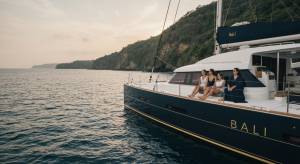
Is a Private Luxury Yacht Charter in Indonesia Safe for Families?
A private luxury yacht charter in Indonesia is exceptionally safe for families when arranged through a reputable, vetted operator. The paramount safety of these voyages rests on three core pillars:
- Professional Crew: International maritime certifications and extensive local knowledge ensure expert navigation and adherence to strict safety protocols.
- Modern Vessel Standards: Luxury yachts are equipped with advanced safety technology, including satellite communication, emergency beacons, and comprehensive medical kits.
- Meticulous Planning: Itineraries are specifically designed to sail within calm, protected waters during optimal weather seasons, prioritizing comfort and security.
The teak deck is warm under your bare feet. A gentle breeze, carrying the scent of clove and saltwater, fills the schooner’s vast sails, pulling you silently through a turquoise channel. Your children are at the bow with the first mate, pointing at a pod of dolphins arcing through the boat’s wake. You are anchored in a private cove in Raja Ampat, a thousand miles from the nearest city, and the only sounds are the lapping water and the distant call of a sea eagle. It is a portrait of profound tranquility. Yet, for any parent, a quiet, persistent question surfaces amidst such splendid isolation: Is this adventure, this incredible immersion in the wild, truly safe for my family? As a senior editor who has sailed these waters extensively, from the dragon-inhabited islands of Komodo to the Spice Islands of the Banda Sea, I can address this question with the detail it deserves. The answer is not a simple yes or no; it is a matter of diligence, expertise, and choosing the right vessel with the right people at the helm.
Deconstructing Safety: Crew Expertise and Vessel Standards
The foundation of any safe maritime journey lies not in the luxury of the appointments, but in the professionalism of the crew and the integrity of the vessel. On the elite indonesia luxury yacht s we represent, the crew is the single most critical safety component. We are not talking about a simple boat driver and a deckhand. A top-tier phinisi, a traditional Indonesian two-masted sailing ship, often operates with a crew of 12 to 18 for just 10 or 12 guests—a crew-to-guest ratio approaching 1.5:1. This team includes a licensed captain with thousands of nautical miles logged in these specific waters, an engineer who knows every hum of the dual engines, and a cruise director who serves as your primary safety officer. “Our primary directive, before any activity, is a comprehensive safety briefing,” explained Thomas, the cruise director on our last voyage aboard the 50-meter Dunia Baru. “Whether it’s a simple snorkel or a shore excursion, every guest, from age seven to seventy, understands the plan, the signals, and the protocols.” Crew members hold certifications recognized by international bodies like the Royal Yachting Association (RYA) or the Maritime and Coastguard Agency (MCA), and all are trained in first aid, CPR, and emergency fire and water rescue procedures based on SOLAS (Safety of Life at Sea) conventions. This human element—a vigilant, highly trained team—is your first and most important layer of security.
The vessel itself is the second layer. A modern luxury charter yacht is a self-contained ecosystem of safety technology. Beneath the polished brass and handcrafted ironwood lies a sophisticated nerve center. Standard equipment includes multiple redundant navigation systems (GPS, radar, depth sounders), high-frequency radios, and, crucially, satellite communication systems like Iridium or Inmarsat, ensuring you are always connected to the outside world, even when far beyond cellular range. In the unlikely event of a critical emergency, an EPIRB (Emergency Position Indicating Radio Beacon) can transmit your exact location to search and rescue services anywhere on the globe. Vessels are equipped with multiple motorized tenders for shore excursions and emergency use, commercial-grade life rafts that far exceed guest capacity, and state-of-the-art fire suppression systems in the engine room and galley. When vetting a charter, it’s essential to ask about these specifics. A reputable operator will transparently provide the vessel’s maintenance logs, safety drill schedules, and a full inventory of its life-saving appliances.
Navigational Prudence: Itinerary and Weather Mastery
The Indonesian archipelago is the largest in the world, a staggering collection of over 17,500 islands stretching more than 5,000 kilometers from east to west. Navigating it is a complex art, one that blends modern technology with generations of local knowledge. The safety of a family charter is directly tied to the intelligence of its itinerary. Reputable charters do not venture into uncharted or notoriously difficult waters. Instead, they operate within specific, well-understood regions during their most placid seasons. For example, the prime season for Komodo National Park is during the dry months, from April to October, when the seas are generally calm, with a sea state often registering a gentle 2-3 on the Beaufort scale. Conversely, the ideal time to explore Raja Ampat in West Papua is from October to April, when the northwest monsoon has subsided, leaving clear skies and tranquil waters. A skilled captain’s greatest asset is prudence. They will always have multiple alternative anchorages planned for each night, allowing them to adapt to any unexpected change in wind or swell, ensuring the yacht is always moored in a calm, protected bay. This preemptive planning is the key to a comfortable and secure journey.
Modern weather forecasting has further revolutionized navigational safety. Captains on luxury vessels receive daily, detailed weather reports and GRIB files via satellite, providing precise data on wind speed, wave height, and atmospheric pressure for their exact location. This allows them to make informed decisions, such as planning longer crossings for the calmest overnight hours or adjusting an itinerary by a day to avoid a passing squall. The journey from Labuan Bajo, the gateway to Komodo, to the iconic Padar Island, for instance, is approximately 45 nautical miles. A captain will time this passage to coincide with favorable tides and currents, making the journey smooth and efficient. This meticulous approach to passage planning transforms what could be a challenging expedition into a serene and predictable experience, which is precisely what families seeking a luxury adventure expect. The answer to whether a private luxury yacht charter in Indonesia is safe is often determined before the anchor is even raised, in the careful calculations and conservative decisions made by the operator and the captain.
Onboard and In-Water Safety for Children
For families, safety concerns are magnified when children are involved. The best charter operators understand this implicitly and have tailored their vessels and procedures accordingly. Onboard, safety is a combination of physical modifications and crew vigilance. Many yachts can be fitted with discreet safety netting around the railings upon request, creating a secure perimeter for younger children. Life jackets are available in a full range of sizes, from infant to adult, and crew members will ensure children are wearing them whenever appropriate, particularly when underway or using the tenders. The crew itself provides a constant, watchful eye. With such a high crew-to-guest ratio, there is always someone available to assist, guide, or simply keep an eye on children playing on deck, allowing parents to relax. The daily rhythm of the boat is also designed with families in mind, with flexible meal times and activities planned to accommodate varying energy levels and nap schedules. This bespoke approach ensures the yacht feels less like a vessel and more like a secure, floating private villa.
In-water activities are where protocols are most visible. Every snorkeling, kayaking, or paddleboarding excursion begins with a detailed briefing from the cruise director or a dedicated divemaster. They explain the specific conditions of the site, point out any potential hazards, and establish clear safety signals and a buddy system. A motorized tender and a crew member will always shadow snorkelers, providing a mobile “safety platform” for anyone who gets tired or needs assistance. iconic wildlife encounters, safety is paramount. During shore excursions to see the famous Komodo dragons within the Komodo National Park, guests are always accompanied by at least two trained park rangers in addition to their own yacht crew. A safe viewing distance of 5 to 10 meters is strictly enforced. When swimming with the majestic manta rays at sites like Manta Point, guides ensure guests understand the importance of passive observation, approaching from the side and never touching the animals. For older children interested in scuba, many yachts have PADI-certified instructors onboard who can offer introductory courses like the Bubble Maker program for kids as young as eight, all in a highly controlled and safe environment.
Health, Hygiene, and Medical Preparedness at Sea
The remoteness that makes an Indonesian yacht charter so appealing can also be a source of anxiety regarding health and medical access. Leading charter companies have built their operations to mitigate these concerns effectively. Onboard hygiene is maintained to the highest international standards. Galleys are often fitted with stainless steel surfaces, and chefs are trained in food safety protocols equivalent to those in high-end restaurants. Provisions are sourced from trusted suppliers, and most yachts feature advanced water purification systems, including reverse osmosis and UV filtration, providing unlimited safe drinking water and eliminating the need for single-use plastic bottles. Guests with dietary restrictions or allergies will find their needs meticulously catered to; pre-voyage preference sheets ensure the chef is fully prepared for any requirement, from gluten-free to severe nut allergies.
Beyond preventative measures, medical preparedness is a critical aspect of a safe charter operation. Every luxury yacht carries a comprehensive offshore medical kit that goes far beyond a basic first-aid box. These kits typically include emergency oxygen, a defibrillator (AED), suturing kits, intravenous fluids, and a wide range of prescription medications to handle common and serious medical situations. At least one, and often several, crew members will have advanced medical training, such as Medical First Aid at Sea or a higher certification. Furthermore, the most reputable operators have a standing relationship with a 24/7 shore-based medical support service like MedAire or International SOS. In the event of a serious medical issue, the captain can be on a satellite phone call with an emergency room doctor within minutes. These services also coordinate medical evacuations (MEDEVAC), and a well-defined emergency action plan is in place to get a patient to the nearest capable medical facility, often via helicopter or a high-speed transfer. This robust medical infrastructure provides a critical safety net, offering peace of mind to families traveling in the far-flung corners of the archipelago.
Choosing the Right Operator: The Decisive Safety Factor
Ultimately, the question of “is a private luxury yacht charter in Indonesia safe” boils down to a single, crucial decision: your choice of operator. The vessel, the crew, the itinerary, and the emergency plans are all a reflection of the company’s ethos and commitment to safety. A slick website and beautiful photos are not enough; due diligence is essential. A premier charter broker or a curated collection like Indonesia Luxury Yachts serves this exact purpose, acting as a trusted filter. We have already done the vetting, inspecting the vessels in person, interviewing the captains, and verifying the credentials and insurance of every yacht we represent. We understand the nuances that separate a good charter from an exceptionally safe one. For families looking to book directly, a checklist of non-negotiable questions is vital. Ask for the vessel’s registration, classification (e.g., Bureau Veritas), and proof of a valid charter license from the Indonesian government.
Request a detailed list of the crew’s qualifications and their tenure with the vessel. Inquire about the specifics of their safety equipment, maintenance schedule, and their documented emergency action plan. A transparent and professional operator will welcome these questions and provide clear, comprehensive answers. You can also cross-reference general travel advice from official sources like the official Indonesian tourism board to understand the broader context of traveling in the region. The price difference between a budget-conscious charter and a high-end luxury vessel often reflects the immense investment in safety infrastructure, crew training, and maintenance. your family’s well-being in a remote environment, this is not an area for compromise. The peace of mind that comes from knowing you are in the hands of a top-tier, safety-obsessed organization is the ultimate luxury, allowing you to fully experience in the magic of the Indonesian archipelago without a flicker of apprehension.
Quick FAQ on Family Yacht Charter Safety
What about seasickness, especially for children?
The phinisi-style yachts common in Indonesia are traditional, heavy displacement vessels, which makes them inherently more stable in the water than lighter monohulls. Furthermore, captains are experts at selecting calm, protected overnight anchorages in the lee of islands. Most voyages involve relatively short passages during the day in good weather. For those who are particularly sensitive, non-drowsy seasickness medication is always available onboard.
Are there age restrictions for children on a private charter?
Generally, no. Private charters are ideal for families as the entire experience can be tailored to your needs. Most yachts welcome children of all ages, from infants to teenagers. While there are age and size requirements for certain activities like scuba diving (PADI’s Junior Open Water Diver course starts at age 10), the crew excels at creating engaging and safe experiences like guided snorkeling, beachcombing, and introductory kayaking for younger guests.
How do we stay in contact with the outside world?
While disconnecting is part of the appeal, staying connected is a safety essential. All premier luxury yachts are equipped with satellite phones for emergency voice calls. Most also offer satellite-based Wi-Fi. It’s important to set expectations: this is not broadband speed. It is typically sufficient for sending emails and messages but may be slow for streaming or large file transfers, and it often comes at an additional cost due to the high price of satellite data.
The answer, then, is a resounding and qualified yes. A journey through Indonesia’s islands by sea is not just a vacation; it is an education, a bond-forging adventure that can be one of the most rewarding experiences a family can share. That reward is earned through careful selection and a commitment to partnering with operators who make safety their silent, unwavering priority. When you step aboard a vessel where every detail, from the crew’s training to the emergency protocols, has been meticulously addressed, you are free to focus on what truly matters: the wonder in your children’s eyes and the extraordinary world unfolding around you.
Your family’s safety is the starting point for every journey we curate. It is the invisible architecture that supports every spectacular moment. Explore our fleet of vetted indonesia luxury yacht s and allow our specialists to design an itinerary where your family’s security is the silent, steadfast anchor of your adventure.